

LSD vs Shrooms: Psychedelics have long captured human curiosity, from cultural exploration to scientific research. Among the most widely discussed are acid (LSD) and psilocybin mushrooms, commonly referred to as shrooms.
In this article, we will compare LSD vs Mushrooms. We will look at their effects, origins, and safety. This will help you understand how they differ.
While both are hallucinogens, they differ significantly in their chemical composition, effects, duration, and potential risks. Understanding these differences is crucial for anyone exploring psychedelics for fun, spiritual, or therapeutic purposes.
For those curious about trying psilocybin, check out our psilocybin mushroom products available for safe and legal research use.
This guide looks at acid vs shrooms. It covers where they come from, how they affect the brain, and the experiences they create. It also discusses health risks, legal rules, and possible medical benefits. Additionally, we’ll provide information about related psychedelics like DMT, address common misconceptions, and offer guidance for harm reduction.
What Are Acid and Shrooms?
LSD, or lysergic acid diethylamide, is a man-made psychedelic. It comes from ergot, a fungus that grows on grains like rye. People widely used LSD in the 1960s counterculture, and it is famous for causing strong hallucinogenic effects. Users typically take LSD in microdoses by placing it on blotter paper, sugar cubes, or gelatin sheets.
People can buy psilocybin mushrooms where it is legal. This is for research or treatment purposes.
Psilocybin mushrooms, often called magic mushrooms or shrooms, are naturally occurring fungi containing the psychoactive compound psilocybin. Once ingested, psilocybin converts to psilocin in the body, affecting serotonin receptors and producing hallucinogenic effects. People have used shrooms for centuries in spiritual and religious rituals. They can help people think deeply and change their awareness.
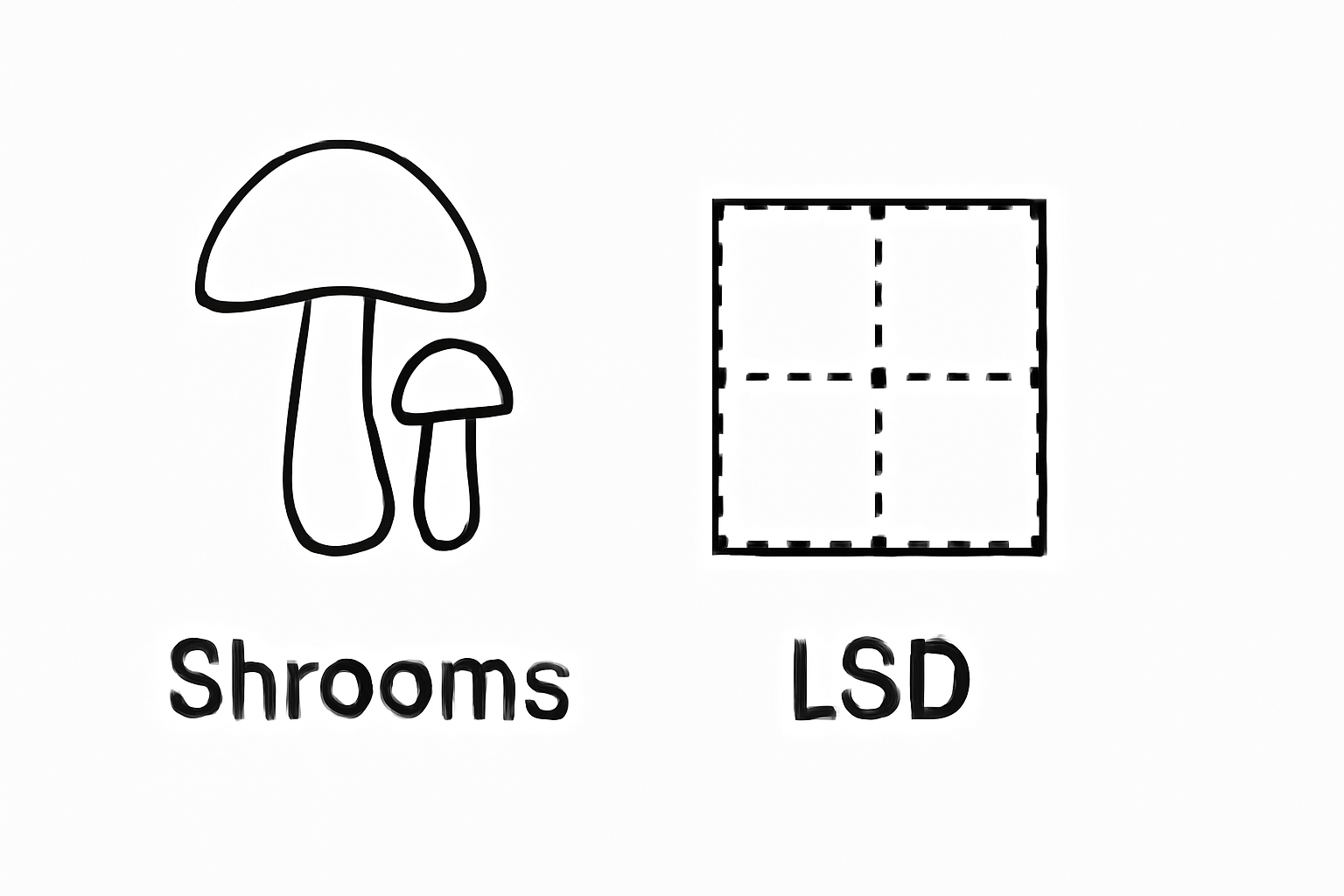
While both LSD and shrooms are hallucinogens, they differ in origin, chemical composition, and duration of effects. People make LSD, and it is very potent even in tiny amounts. Psilocybin mushrooms are natural and often provide a more thoughtful and reflective experience.
Explore more about our psychedelic products and research
National Institute on Drug Abuse – Hallucinogens
Chemical Composition and Sources
LSD is synthesized in laboratories through a semi-synthetic process involving ergotamine from ergot fungi. The resulting compound is highly potent, requiring doses as small as 20 micrograms to produce noticeable effects.
Psilocybin mushrooms, in contrast, are naturally occurring fungi. Species such as Psilocybe cubensis and Psilocybe liberty cap mushrooms contain varying concentrations of psilocybin and psilocin. These mushrooms grow in tropical and subtropical regions, thriving in soil rich with decaying plants or animal dung.
Key Differences in Composition:
When looking at acid vs mushrooms, several factors like duration, intensity, and brain chemical action vary.
- LSD: Synthetic, pure, and highly concentrated; affects serotonin and dopamine receptors.
- Shrooms: Natural, variable potency; primarily affects serotonin receptors with some activity at dopamine and histamine receptors.
Johns Hopkins Psychedelic Research
How LSD and Shrooms Affect the Brain
Both LSD and psilocybin primarily target serotonin 2A (5-HT2A) receptors in the brain. These receptors influence perception, mood, and cognition, leading to the profound visual and sensory distortions associated with hallucinogens.
- LSD: Strong activity at serotonin and dopamine receptors, often producing intense visual false visions, time distortion, and ego dissolution.
- Shrooms: Psilocybin converts to psilocin, influencing serotonin and other minor receptors, generally leading to emotional introspection and spiritual experiences.
Despite these similarities, the subjective experiences of LSD vs shrooms differ. LSD is often more cerebral and energetic, while psilocybin is emotional, grounding, and introspective.
Learn more about serotonin and psychedelics
Duration and Intensity
The LSD vs shrooms duration differs significantly:
- LSD: Onset ~30–60 minutes; effects last 8–12 hours.
- Shrooms: Onset ~20–40 minutes; effects last 4–6 hours.
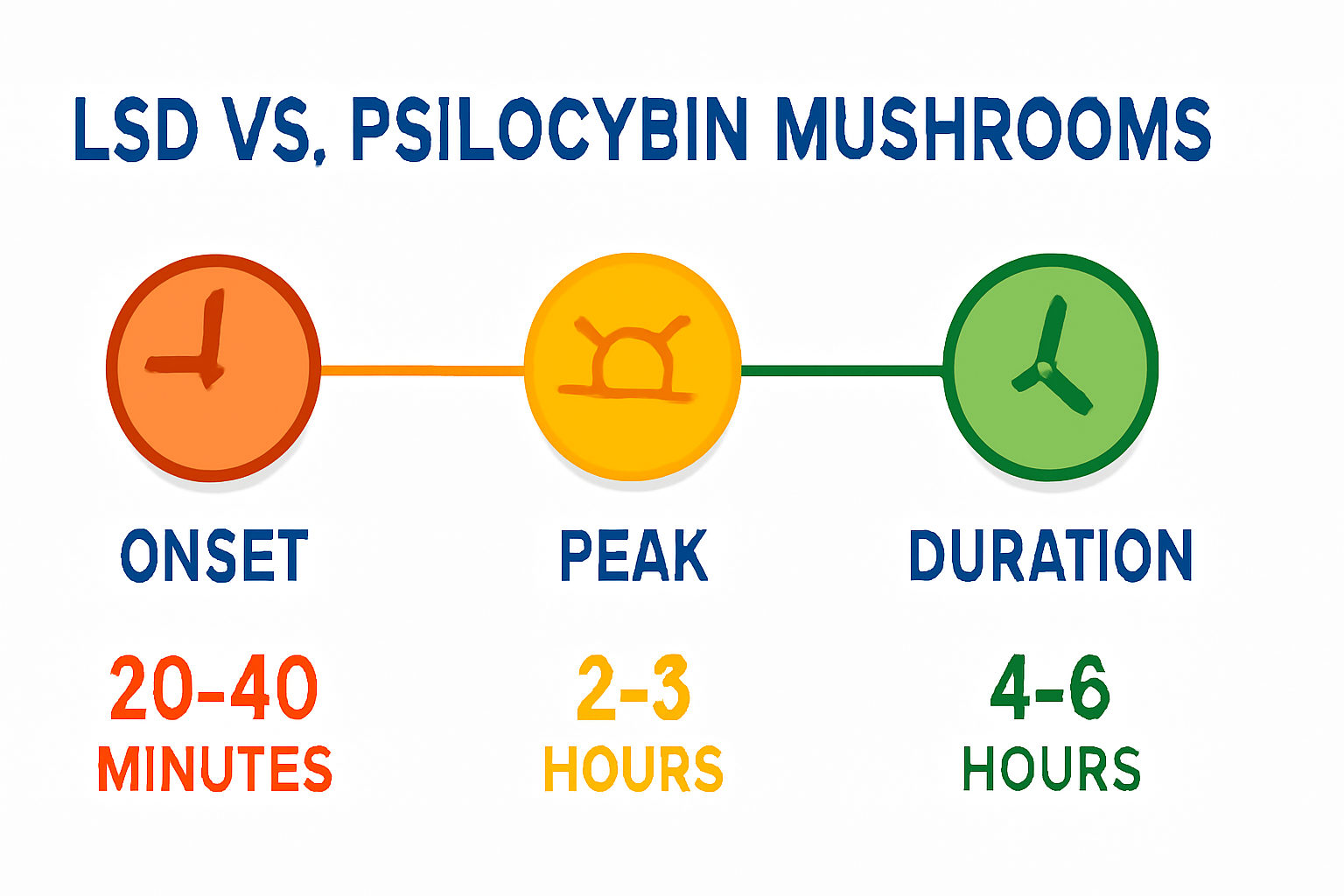
LSD lasts longer, creating a more intense mental experience. In contrast, psilocybin has a shorter trip that allows for deeper emotional reflection. Both substances can produce visual mind tricks, altered sense of time, and enhanced sensory perception.
Erowid LSD and Psilocybin Experiences
Subjective Experiences and Perceptual Changes
Visual and Auditory False Visions
- LSD: Vivid geometric patterns, intensified colors, and moving visuals. Auditory false visions are possible.
- Shrooms: Visual distortions often include enhanced color perception and morphing shapes. Auditory experiences tend to be subtler.
Emotional and Mystical Experiences
Psilocybin mushrooms often create feelings of connection, empathy, and faith. In contrast, LSD trips can cause ego loss and deep thoughts. Both substances can lead to difficult experiences, often called bad trips. These can include feelings of anxiety, paranoia, or fear of death.
Lsd vs Psilocybin Mushrooms Effects
While neither LSD nor psilocybin is considered physically addictive, psychological dependence can occur. Misuse or high doses increase the risk of negative experiences.
Potential Side Effects:
- Anxiety, paranoia, or panic attacks
- Rapid heart rate and increased blood pressure
- Tremors or numbness
- Nausea or dizziness (more common with shrooms)
- Hallucinogen-persisting perception disorder (HPPD) in rare cases
It’s important to know the side effects of LSD vs shrooms. These can include anxiety, paranoia, nausea, and, in rare cases, hallucinogen-persisting perception disorder (HPPD).
Important Note: Individuals with pre-existing mental health conditions should exercise extreme caution.
Many users wonder about shrooms vs lsd, especially regarding the intensity of false visions and emotional experiences.
Taking a higher dose of LSD or shrooms can make false visions and emotions stronger. It can also increase the chance of a bad trip.
Learn more on Psychedelic for beginners
Johns Hopkins – Psilocybin Research
Dosage, Methods of Consumption, and Set & Setting
LSD
- Typically ingested on blotter paper, sugar cubes, or liquid drops
- Dosage is measured in micrograms due to high potency
- Set (mindset) and setting (environment) are critical for a safe experience
Psilocybin Mushrooms
- Commonly eaten dried, brewed as tea, or mixed into edibles
- Dosage varies depending on species and potency
- Less potent per weight compared to LSD, but emotional and introspective effects are stronger
Different species contain varying doses of psilocybin, which influence the strength of the hallucinogenic and introspective effects.
Harm Reduction Tips: Use in a safe environment, avoid mixing substances, and have a sober sitter present during trips.
Some users practice microdosing psilocybin to enhance creativity, mood, or focus without inducing full hallucinogenic effects.
Some licensed websites allow you to buy LSD online. This is legal for research purposes. You can use these sites safely.
LSD vs Shrooms in Therapeutic Use
Both LSD and psilocybin are being researched for therapeutic applications:
- Psilocybin: Treatment for depression, anxiety, PTSD, and addiction
- LSD: Evidence for alcohol addiction treatment and counseling adjuncts
Clinical studies show promising results for carefully controlled psychedelic therapy. However, self-experimentation carries significant risk and should not replace professional guidance.
MAPS – Psychedelic Therapy Research
Legal Status
- LSD: Schedule I controlled substance (illegal under federal law in the U.S.)
- Psilocybin Mushrooms: The federal government classifies psilocybin mushrooms as a Schedule I substance. However, some states like Oregon and Denver have made them legal for therapeutic use
Legal status varies internationally. Research into safe and controlled therapeutic use is expanding.
Common Misconceptions
- Are mushrooms acid? No, psilocybin mushrooms and LSD are chemically distinct, though both are psychedelics.
- Do shrooms and LSD cause physical addiction? No, but psychological dependence is possible.
- Can you mix LSD and shrooms safely? No, combining psychedelics increases the risk of a bad trip and uncertain outcomes.
DMT vs Mushrooms
DMT (dimethyltryptamine) is another powerful hallucinogen, often compared with psilocybin mushrooms:
- DMT: Very short, intense trips (10–30 minutes) when smoked or vaporized
- Shrooms: Longer, more introspective trips (4–6 hours)
- Brain chemistry: Both target serotonin receptors, but DMT acts more rapidly and intensely
Legal Disclaimer
The content provided is for educational purposes only. It does not constitute medical advice. LSD and psilocybin mushrooms are controlled substances in many countries.
Use only in compliance with local laws and under professional guidance. The authors and website disclaim any legal responsibility for personal use.
Frequently Asked Questions (FAQs)
1. What is microdosing LSD or shrooms like?
Microdosing involves taking sub-perceptual doses to enhance creativity, focus, or mood without full false visions. Effects vary widely depending on dosage and individual sensitivity.
2. Are there long-term effects of psychedelics?
Physical toxicity is low. However, using it frequently may increase the risk of HPPD, ongoing anxiety, or mental distress in some individuals.
3. Can psychedelics help with mental health conditions?
Under professional supervision, psychedelics show promise in treating depression, PTSD, anxiety, and addiction, though self-experimentation carries significant risk.
#acid vs mushrooms #bad trips #buy LSD online #buy psilocybin mushrooms #DMT vs mushrooms #hallucinogen comparison #hallucinogens #harm reduction #LSD duration #LSD effects #LSD vs Shrooms #magic mushrooms #microdosing psilocybin #psilocybin effects #psilocybin mushrooms #psychedelic effects #psychedelic safety #psychedelic therapy #shrooms duration #shrooms vs LSD
Related Posts
 Ibogaine vs Ayahuasca: What to Know About Therapy